Feb 9, 2026
Women in Science at the Presidio: Restoring Habitats, Protecting Wildlife, and Connecting People to Nature for Generations to Come
Meet Presidio scientist restoring ecosystems, protecting wildlife, to keep the park thriving.If you’ve ever wandered the nature trails of the Presidio, watched birds skim the wetlands of Crissy Field Marsh, or caught a glimpse of coyotes at dusk with the Golden Gate Bridge in the background, you’ve experienced the quiet magic of one of San Francisco’s most vibrant ecosystems.
Behind that magic is the Presidio’s dedicated Natural Resources team, working year-round to protect and restore more than 600 acres of habitat across this unique national park site. From growing tens of thousands of native plants at the Presidio Nursery to monitoring wildlife and revitalizing wetlands and dune habitats, their work ensures the Presidio remains a thriving home for people and wildlife alike.
We spoke with Presidio Wildlife Ecologist Phoebe Parker-Shames to learn more about this work.
Q&A with Wildlife Ecologist Phoebe Parker-Shames, PhD
What first sparked your curiosity about your field of interest?
I’ve always been interested in wildlife and nature – I was a very outdoorsy kid. My first interest in ecology as a discipline came in high school when my brother gave me a book of essays by David Quammen. My interest in and understanding of conservation and management came much more slowly as I realized that the typical way we teach people about ecosystems – with nature on one side and humans on the other – didn’t fit with the way the world actually operated. Much of my early field research experience was in remote areas, but even in those systems, humans were very much a part of the processes. I developed the urge to do science that was useful, applied to conservation and management, and that explicitly recognized the role of humans as part of nature. Urban ecology and management have suited me quite well in that regard.
Did you always want to be a scientist, or was there a defining moment when you decided this was your future?
I definitely didn’t always want to be a scientist. By the time I got to high school, I didn’t consider myself very good at math or science, but I liked writing about science. At first I wanted to be a science journalist, but once I started taking ecology classes in college, I realized that I actually enjoyed doing the research even more than writing about it.
What is the most exciting and challenging aspect of your daily work?
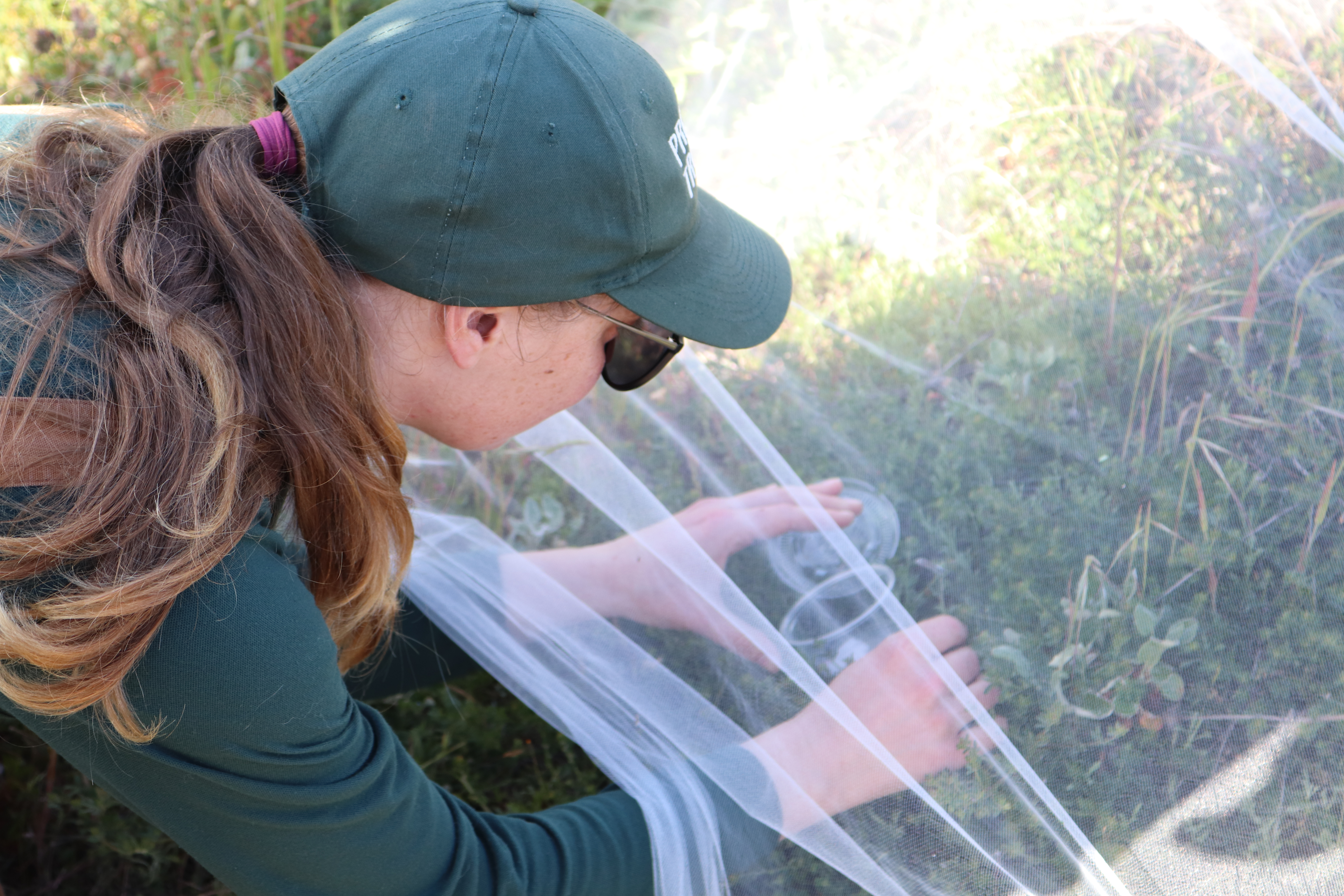
Every day is different for me, which is part of what makes my job so fun. The biggest challenge is probably the weight of decision-making – which species to reintroduce, what monitoring projects to prioritize, which outreach messages to emphasize – the choices we make have a real impact on the ecosystems of the park and the people who live, work, and recreate in them. We don’t always have the luxury of time, or enough information, to know whether every decision is the right one, but I hope that on balance we usually make the best possible call.
What drives your curiosity to understand the world around you?
The world is so deeply complex and beautiful. Somehow people tend to think that understanding something makes it lose its magic, but for me that sense of awe only increases as I realize how complex, fragile, and improbable so much of the mechanisms underlying everything we see in nature actually are.
How does your work contribute to the Presidio’s goal of being a model of environmental stewardship?
My work is deeply entwined with the Presidio’s goals. My role is to manage the park’s wildlife and habitat for biodiversity and resilience. We do this by trying our best to ensure we’re using the latest science to guide our decision-making, collaborating with our partners, and drawing on the deep and diverse expertise of our team.
If you weren’t a scientist, what would you be doing?
I’d probably become an author or a journalist. At one point I considered dropping out of my doctorate program to become an Emergency Medical Technician or a wilderness first responder.
What brings you the most joy in or about the Presidio as a park?
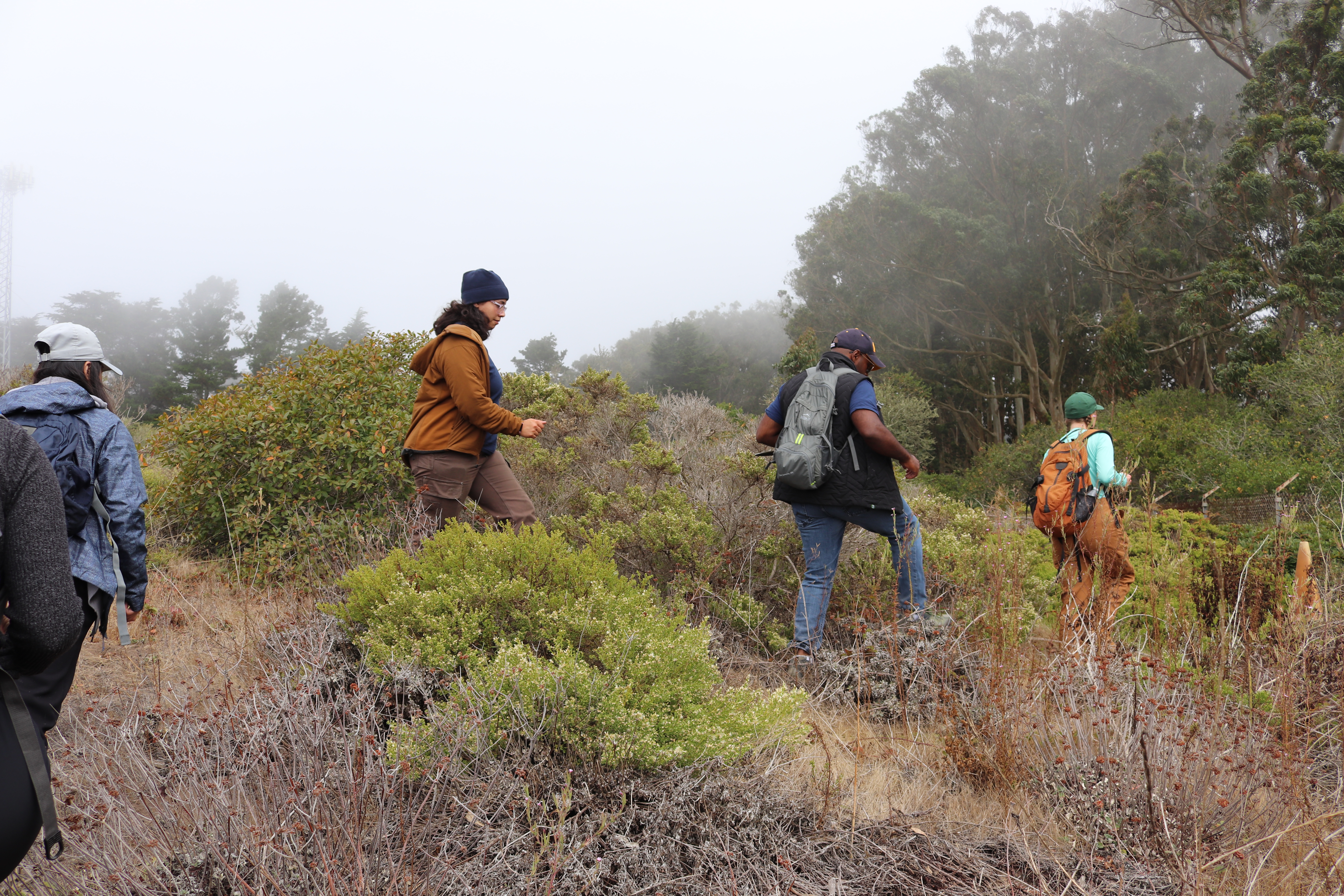
I have small, momentary joys, and also longer, deeper joys in this park. Every day, I get to see something beautiful that brings me joy – a western bluebird flittering past my office window, a hawk calling while it wheels overhead, the imposing towers of the Golden Gate Bridge poking up from behind the trees. I also feel profoundly joyful to get to work in a park that provides a message of hope through restoration – many of the landscapes that have been restored here could’ve been completely written off from an ecological or aesthetic perspective, but the years of hard work have completely transformed them into biodiverse, beautiful spaces.
What are some practices and solutions found in the Presidio to help build a more inclusive Science, Technology, Engineering, and Mathematics (STEM) ecosystem in the park?
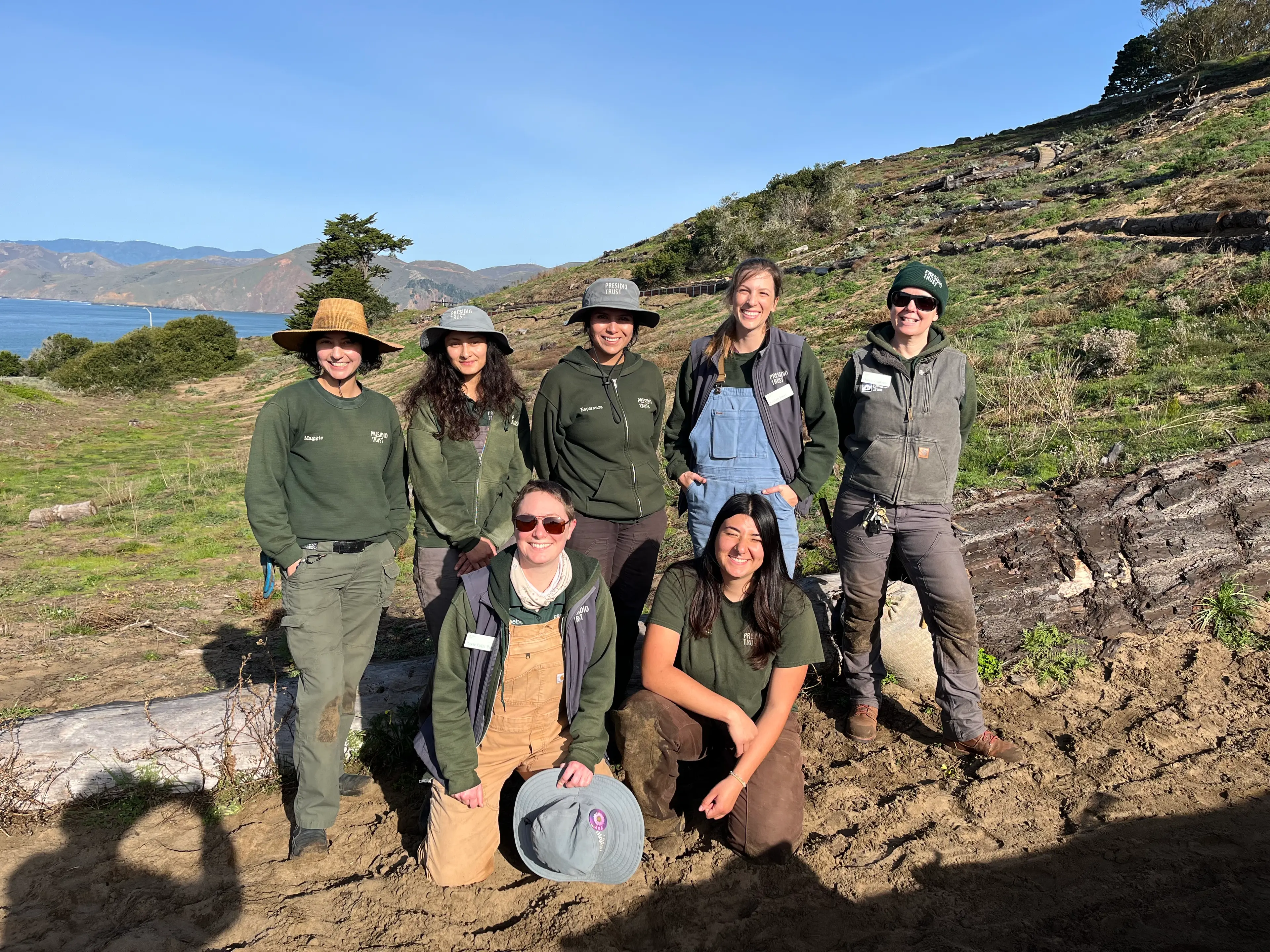
Creating inclusive STEM fields is a multifaceted, thoughtful process. Systemic change is very similar to ecological restoration – it benefits from clear goals, hard work, an understanding of history, iterative change, adaptation, and ongoing maintenance. In the past, the Trust used internships to provide experience opportunities for people starting their careers in natural resources, and a lot of our current staff were once interns in the Presidio or elsewhere in the Golden Gate National Recreation Area (I think at least half of us in the photo were former interns). With the recent instability of the AmeriCorps program, we no longer have an internship pathway directly, but we do offer support to Golden Gate National Parks Conservancy and National Park Service interns. Volunteers and student researchers from local universities are another way for us to engage with people early in their careers, but I hope we’ll find a way to offer more formal avenues for early career experience again soon.
In addition to creating pathways for building experience, it’s important to support people once they’re in those positions, and I feel incredibly lucky to work with a team that makes me feel like I belong. The Presidio Trust is built on strong core principles to protect the planet, maintain successful performance, and welcome all people – it can be a tricky balance, but if we’re able to keep our value of inclusiveness at the forefront, we can go a long way towards fostering a space for diverse, competent, and creative science.